

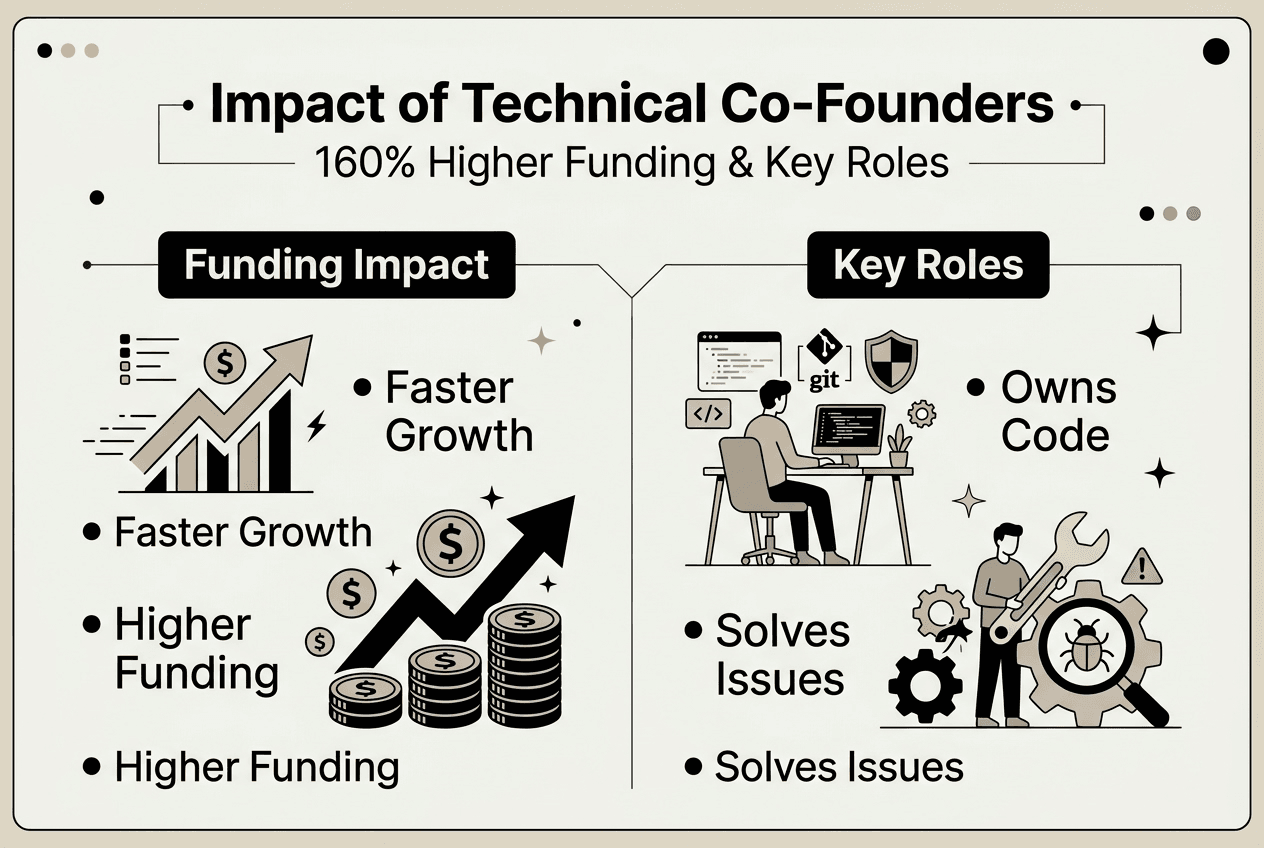
Startups with technical co-founders are 160% more likely to reach Series A funding. That’s not a marginal edge. That’s the difference between building something investors believe in and burning through savings on a product nobody trusts. If you’re a non-technical founder trying to validate a tech idea without giving away half your company, understanding what a technical co-founder actually does and how to work with one isn’t optional anymore. It’s survival.
Table of Contents
-
Challenges Non-Technical Founders Face Finding And Working With Technical Co-Founders
-
What Does A Technical Co-Founder Actually Do? Key Roles And Responsibilities
-
How To Find And Attract The Right Technical Co-Founder Without Giving Up Equity
Key takeaways
| Point | Details |
| Technical co-founders increase funding success | Startups with technical leadership are 160% more likely to secure Series A investment compared to non-technical teams. |
| Finding technical talent is challenging | Non-technical founders struggle with networking, evaluating skills, and attracting capable technical partners without equity dilution. |
| They bridge vision and execution | Technical co-founders translate business goals into scalable technology, preventing costly miscommunication and technical debt. |
| They reduce legal and technical risk | A technical co-founder manages compliance, security, and architectural decisions that protect the company from liability. |
| They attract engineering talent | Elite developers join startups led by technical co-founders who understand the craft and can build high-performing teams. |
Why a technical co-founder is essential for startup success
The data is clear. Startups with at least one technical co-founder are nearly 160% more likely to reach Series A compared to teams composed entirely of non-technical members. That’s not correlation. That’s causation investors have learned to trust.
Most successful startups have at least two founders, typically split between business strategy and technical execution. This structure exists because building a tech product requires simultaneous mastery of market dynamics and engineering discipline. Non-technical founders who try to outsource the entire technical side to contractors or junior hires end up with fragile products that can’t scale, can’t pivot, and can’t attract serious investment.
A technical co-founder provides more than code. They bring technical vision, the ability to launch a SaaS MVP fast, and the credibility to make architectural decisions that won’t collapse under user growth. They understand the difference between a prototype and a production system. They know when to cut scope and when to invest in infrastructure. They can evaluate whether a feature request is technically feasible or a six-month detour.
Without that leadership, non-technical founders make expensive mistakes:
-
Choosing the wrong technology stack that limits future hiring and scalability
-
Building features that sound impressive but serve no validated user need
-
Ignoring security and compliance until a breach forces a complete rebuild
-
Hiring contractors who deliver code that works once but breaks under real-world conditions
The technical co-founder also reduces risk by owning accountability. When something breaks, they fix it. When performance degrades, they optimize it. When investors ask how the system scales, they answer with specifics, not vague promises. That ownership builds trust internally and externally, which is why startup success research consistently shows technical leadership correlates with funding outcomes.
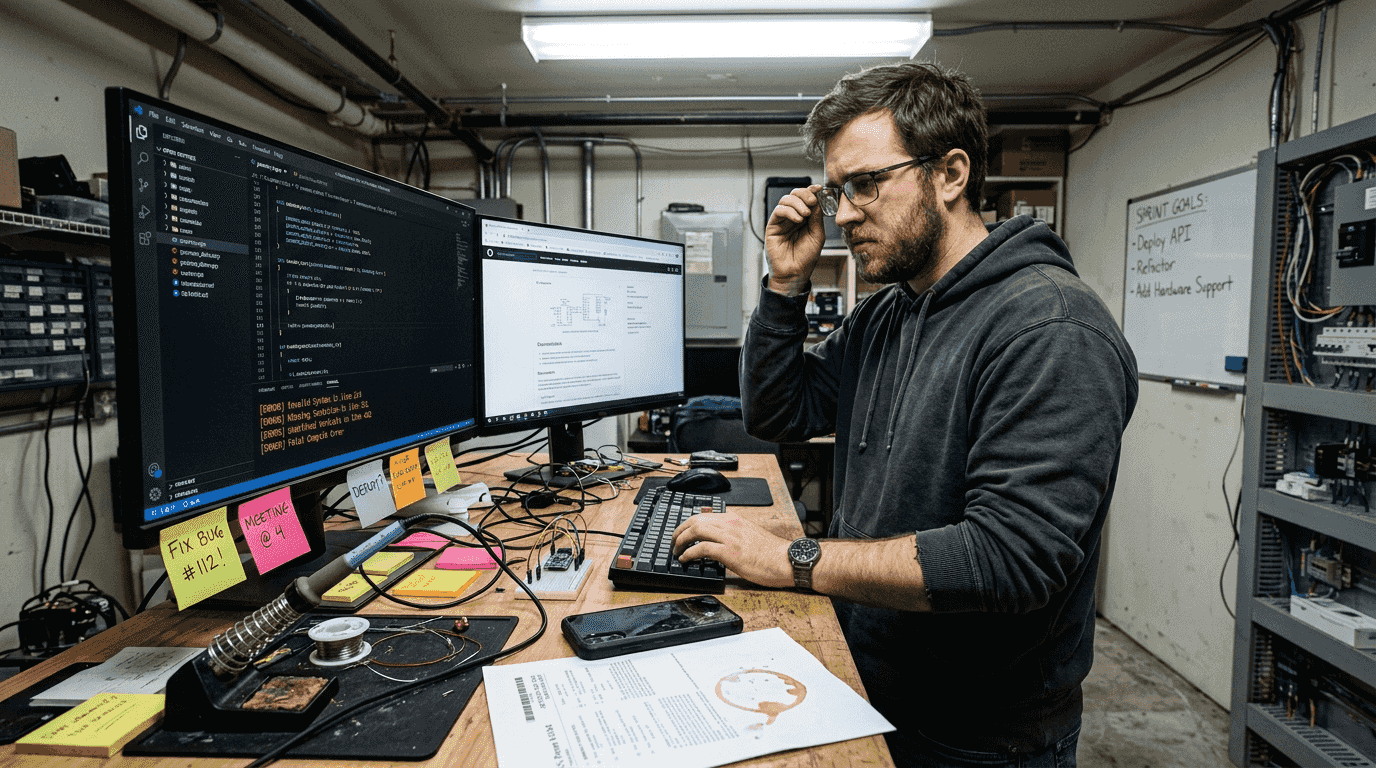
Collaboration between business and technical co-founders works when both respect what the other brings. The business co-founder owns customer discovery, revenue strategy, and market positioning. The technical co-founder owns product architecture, team building, and delivery velocity. Neither can succeed alone, but together they create the conditions for a scalable, fundable company.
Challenges non-technical founders face finding and working with technical co-founders
Finding a technical co-founder is one of the hardest early moves a non-technical founder can make. The talent pool is limited, the best engineers already have options, and evaluating technical skill without technical knowledge is nearly impossible. You can’t assess code quality, architectural thinking, or problem-solving ability if you don’t speak the language.
Networking compounds the problem. Technical talent congregates in communities non-technical founders rarely access: GitHub, Stack Overflow, niche Slack channels, and local meetups focused on specific frameworks. Cold outreach on LinkedIn rarely works because engineers get flooded with generic pitches from recruiters and founders who haven’t done their homework.
Even when you find someone interested, miscommunication kills momentum. The number one reason projects fail isn’t bad code, it’s miscommunication. Non-technical founders describe features in business terms. Technical co-founders think in systems, constraints, and tradeoffs. Without a shared vocabulary, simple requests turn into weeks of rework because what was built doesn’t match what was imagined.
Many non-technical founders try to bridge the gap by hiring contractors or junior developers. This creates what’s known as the Translation Tax: the cost of explaining technical decisions through intermediaries who don’t own the outcome. Contractors deliver what’s specified, not what’s needed. Junior hires lack the experience to push back on bad ideas or suggest better approaches. The result is wasted capital on a product that can’t validate a SaaS idea before investing in development.
Common miscommunication issues include:
-
Underestimating timelines because technical complexity isn’t visible
-
Requesting features that sound simple but require rebuilding core systems
-
Ignoring technical debt until the codebase becomes unmaintainable
-
Expecting perfection on the first iteration instead of iterating based on user feedback
Alignment on vision and role definitions prevents most of these problems. Before committing to a technical co-founder relationship, clarify who owns product decisions, how disputes get resolved, and what success looks like at each milestone. Write it down. Revisit it quarterly. Misalignment early becomes resentment later.
Pro Tip: Build trust by admitting what you don’t know. Technical co-founders respect founders who ask questions, not founders who pretend to understand. Transparent communication about expectations, constraints, and concerns creates the foundation for effective collaboration.
What does a technical co-founder actually do? Key roles and responsibilities
A technical co-founder acts as the bridge between market signal and product reality. They take customer pain points identified by the business co-founder and translate them into features, architecture, and code that actually solve the problem. That translation requires both technical skill and business judgment, which is why contractors can’t replace co-founders.
Here’s what a technical co-founder does day to day and strategically:
-
Leads MVP development by choosing the right stack, defining scope, and shipping a working product in weeks, not months.
-
Recruits and builds the engineering team by attracting talent who trust technical leadership and want to work on hard problems.
-
Owns technical strategy and scalability by making architectural decisions that support growth without constant rewrites.
-
Manages technical and legal risk by implementing security, compliance, and data protection measures that prevent liability.
-
Reduces dependency on third parties by building internal capabilities instead of outsourcing critical systems to agencies or platforms.
Without a technical lead at the cap table, a startup is often just a tenant on someone else’s platform. You’re vulnerable to pricing changes, feature deprecations, and strategic pivots that kill your business overnight. A technical co-founder builds ownership, not dependency.
The table below compares typical responsibilities between non-technical and technical co-founders:
| Responsibility | Non-Technical Co-Founder | Technical Co-Founder |
| Customer discovery | Interviews, surveys, market research | Validates technical feasibility of solutions |
| Product roadmap | Prioritizes features based on business value | Estimates effort and identifies technical constraints |
| Fundraising | Pitches investors, manages cap table | Demonstrates product, answers technical due diligence |
| Team building | Hires sales, marketing, operations | Recruits engineers, sets development culture |
| Risk management | Legal, financial, market risks | Security, compliance, technical debt |
Pro Tip: Prioritize co-founders who complement your problem expertise with solution expertise. If you deeply understand the market, find someone who deeply understands how to build software that scales. Overlapping skills waste equity on redundancy.
For more insights on building scalable products, explore SaaS development strategies that technical co-founders use to ship faster.
How to find and attract the right technical co-founder without giving up equity
Equity dilution scares founders, but alternatives exist if you’re willing to structure deals creatively. The key is offering value beyond equity: meaningful work, ownership over decisions, and a path to financial upside that doesn’t require giving away half the company on day one.
Consider these alternative arrangements:
-
Contractor to co-founder path: Start with a paid engagement to validate fit, then convert to equity if collaboration works.
-
Deferred equity: Offer equity that vests based on milestones like product launch, first revenue, or Series A close.
-
Sweat equity: Allocate equity proportional to hours contributed, documented transparently to avoid disputes.
-
Profit sharing: Instead of equity, offer a percentage of profits until a specific return threshold is met.
Networking in 2026 requires going where technical talent actually spends time. Join communities like Indie Hackers, Product Hunt, and niche Discord servers focused on your industry. Attend local meetups for specific technologies like React, Node.js, or mobile development. Contribute to open source projects to demonstrate you understand how software teams operate.
A technical co-founder is the primary recruitment tool for an elite engineering team. Once you have one, hiring becomes easier because engineers trust other engineers to evaluate technical fit. That network effect compounds as your team grows.
The table below compares common approaches to engaging technical partners:
| Approach | Pros | Cons | Best For |
| Full equity co-founder | Deep commitment, aligned incentives | High dilution, hard to exit if fit fails | Proven relationship, shared vision |
| Contractor to co-founder | Low initial risk, validates fit | May lose talent to other offers | Early stage, limited budget |
| Deferred equity | Preserves early equity, milestone based | Requires clear legal structure | Founders with revenue or funding |
| Technical advisor | Guidance without dilution | No hands-on execution | Strategic input, not development |
Beyond coding skills, look for these traits in a technical co-founder:
-
Product thinking: Can they prioritize features based on user value, not technical elegance?
-
Communication: Do they explain technical tradeoffs in business terms?
-
Ownership mentality: Will they take responsibility for outcomes, not just deliverables?
-
Adaptability: Can they pivot when market feedback invalidates assumptions?
-
Team building: Have they hired and mentored engineers before?
Clear legal agreements from the start prevent disasters later. Define roles, equity splits, vesting schedules, and exit terms in writing. Use a lawyer who specializes in startup formation, not a generalist. The cost upfront is trivial compared to the cost of resolving founder disputes after the company has traction.
For non-technical founders ready to move fast, explore MVP development services that provide technical leadership without equity dilution.
Accelerate your MVP with expert engineering support
If finding a technical co-founder feels like a six-month detour, there’s another path. Working with a senior engineer who’s built SaaS products from scratch gives you technical execution without the equity negotiation, the vesting drama, or the risk of a bad co-founder fit.
I’m Hanad Kubat, a Fortune 500 engineer who’s shipped production systems for BMW, Deutsche Bahn, and IBM. I build MVPs for non-technical founders in 4 to 12 weeks using React, Next.js, Node.js, and React Native. No project managers, no game of telephone. You work directly with the person writing the code.
This isn’t a replacement for a co-founder. It’s a way to validate your idea, attract users, and prove traction before you dilute equity or commit to a long-term technical partner. Once you have revenue and product-market fit, hiring a technical co-founder or CTO becomes easier because you’re de-risked.
For detailed technical context and implementation patterns, review the full technical documentation that guides every build.
Frequently asked questions about technical co-founders
What is the difference between a technical co-founder and a CTO?
A technical co-founder is an equity partner who shares ownership and risk from day one. A CTO is a hired executive who joins later, typically after product-market fit, and receives salary plus equity. Co-founders build the foundation together. CTOs scale what’s already working.
Can I find a technical co-founder without giving up equity?
Yes, but it requires creative structuring. Options include contractor-to-co-founder paths, deferred equity tied to milestones, profit-sharing agreements, or hiring a senior engineer as a technical advisor. Each approach trades equity for other forms of value like cash, flexibility, or reduced risk.
How do technical co-founders help in avoiding legal issues?
Technical co-founders implement security measures, ensure compliance with data protection regulations, and make architectural decisions that reduce liability. They understand how to handle user data, prevent breaches, and document technical decisions that protect the company during audits or legal disputes.
Why is communication between founders so critical?
Miscommunication is the number one reason technical projects fail. When business and technical co-founders don’t share a common vocabulary, simple requests turn into expensive rework. Clear communication ensures everyone understands priorities, constraints, and tradeoffs before committing resources.
What should I prioritize when selecting a technical co-founder?
Prioritize product thinking over pure coding skill. A great technical co-founder understands user needs, prioritizes features based on business value, communicates tradeoffs clearly, and takes ownership of outcomes. Technical skills matter, but judgment and alignment matter more.