

You’ve spent months refining your startup idea, but how do you know if anyone will actually pay for it? Most founders skip validation and build features nobody wants. This wastes time, money, and momentum. A structured MVP validation checklist helps you test your core assumptions with real users before you invest heavily in development. This article walks you through practical criteria, actionable steps, and proven methods to validate your MVP efficiently and enhance product-market fit.
Table of Contents
-
Comparison Of Common MVP Validation Methods For Non-Technical Founders
-
Boost Your Startup Success With Expert MVP Development Support
Key takeaways
| Point | Details |
| Validation prioritizes learning | Test customer needs and willingness to pay before building full features. |
| Focus on core value only | Strip your MVP to the minimum feature set that solves the primary problem. |
| Data drives decisions | Use measurable metrics like sign-ups, engagement, and retention to guide iterations. |
| Multiple methods available | Landing pages, no-code prototypes, and interviews each offer different validation depth. |
| Clear criteria prevent waste | A checklist keeps you focused on what matters and stops scope creep early. |
Understanding MVP validation criteria for startups
Effective MVP validation starts with clear, relevant criteria focusing on customer value and learnings. Before you write a single line of code, you need standards to judge whether your idea has legs. These criteria act as your evaluation framework, helping you separate genuine interest from polite feedback.
Start by defining the core problem your product solves. Write it in one sentence. If you can’t explain it simply, your target customer won’t understand it either. Next, state your hypothesis clearly: who has this problem, why existing solutions fail, and how your approach differs. This clarity prevents you from chasing vague goals.
Set measurable validation goals upfront. Decide what success looks like in numbers: 100 email sign-ups in two weeks, 20% of interviewees saying they’d pay, or 50% of testers using the feature daily. These metrics give you objective signals instead of relying on gut feelings. Without numbers, you’ll rationalize weak feedback into false validation.
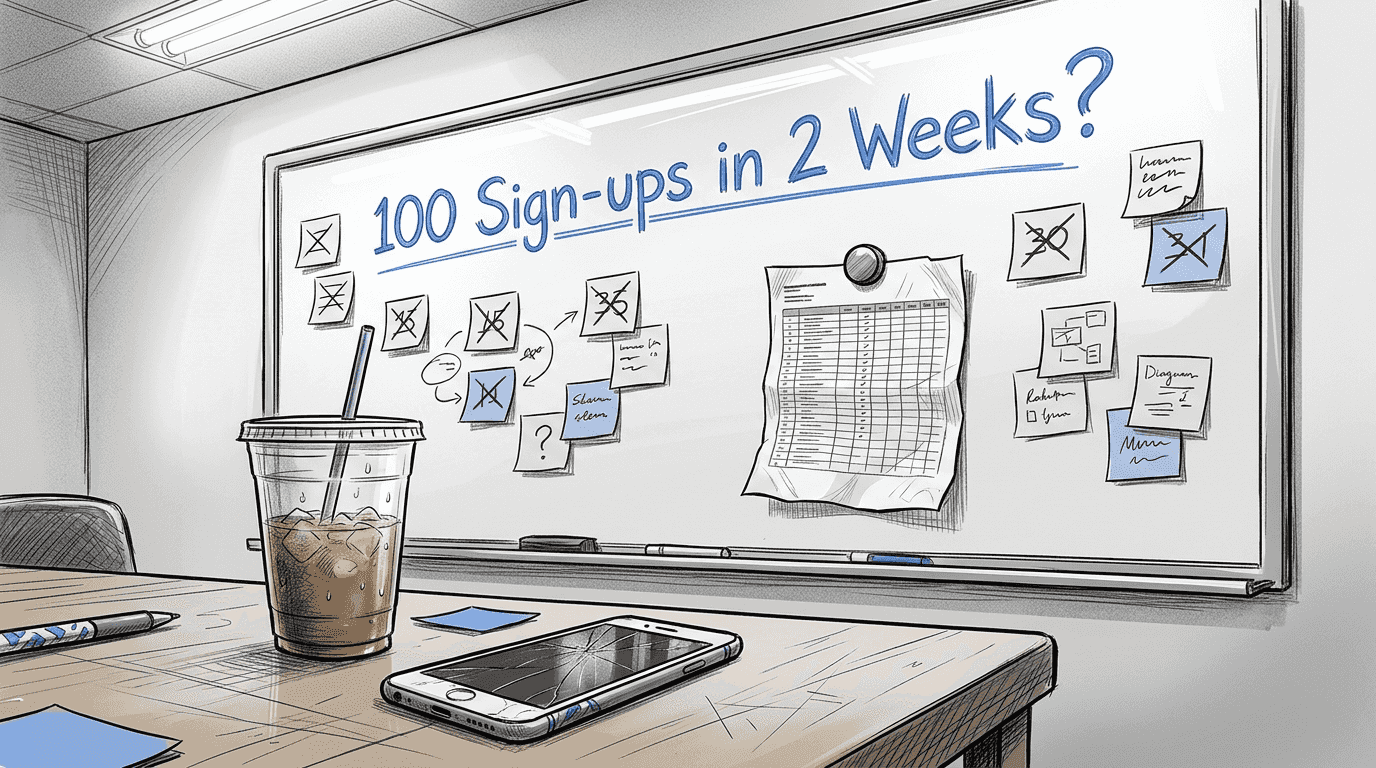
Focus ruthlessly on essential features that deliver the core value. Your MVP should do one thing well, not ten things poorly. List every feature you think you need, then cut half. Cut half again. What remains is your true minimum. This discipline forces you to validate the concept itself, not your ability to build a complex product.
Include customer discovery and interviews early in your process. Talk to at least 20 potential users before building anything. Ask about their current pain points, existing solutions they’ve tried, and what they’d pay to solve the problem. Listen more than you pitch. Their language and priorities will reshape your understanding of the market.
Iterate based on data, not assumptions. When feedback conflicts with your vision, trust the data. Founders often ignore negative signals because they’re emotionally invested. Your job during validation is to disprove your idea, not confirm it. If it survives honest scrutiny, you’ve found something worth building.
Pro Tip: Write down three assumptions that must be true for your business to work, then design validation tests specifically to challenge each one. If any assumption fails, pivot before you waste resources.
MVP validation checklist: step-by-step actionable items
A thorough MVP validation checklist increases the likelihood of building a product that fits the market while minimizing wasted development. Use this sequence to move from concept to validated learning systematically. Each step builds on the previous one, creating a clear path from hypothesis to evidence.
-
Identify your minimum feature set to solve the core problem. Write down every feature you think users need, then rank them by impact. Keep only the top three that directly address the primary pain point. Everything else is noise at this stage.
-
Create simple prototypes or landing pages for early validation. A landing page with a clear value proposition, benefit bullets, and an email capture form tests demand in days, not months. Tools like Carrd, Webflow, or even a Google Form work. The goal is to see if people care enough to leave their email.
-
Conduct targeted user interviews and surveys. Reach out to your ideal customer profile directly. Ask open-ended questions about their current workflow, pain points, and what they’ve tried before. Avoid leading questions like “Would you use a tool that does X?” Instead ask, “How do you currently handle X?”
-
Track key metrics: sign-ups, engagement, retention. Decide which numbers matter most for your validation goals. If you’re testing demand, track landing page conversion rates. If you’re testing usability, measure how many users complete core actions. Set thresholds before you start collecting data.
-
Gather qualitative feedback and iterate promptly. After users interact with your prototype or concept, follow up within 24 hours. Ask what confused them, what they expected, and what they’d change. Use their exact words to refine your messaging and features. Speed matters because fresh feedback is accurate feedback.
Pro Tip: Run validation in one-week sprints. Each Monday, set a validation goal. By Friday, analyze results and decide whether to iterate the same concept or test a different assumption. This cadence prevents analysis paralysis.
Comparison of common MVP validation methods for non-technical founders
Non-technical founders benefit from various validation methods such as landing pages, no-code prototypes, and customer interviews, each balancing speed and feedback quality. Choosing the right method depends on your skills, budget, timeline, and how much depth you need. Here’s how the most popular approaches stack up.
| Method | Speed | Cost | Feedback Depth | Technical Skill Required |
| Landing page | 1-2 days | $0-$50 | Low (interest signals only) | None |
| No-code prototype | 1-2 weeks | $0-$200 | Medium (usability + interest) | Basic tool familiarity |
| Customer interviews | 2-4 weeks | $0 (your time) | High (motivations + pain points) | None |
| Paid ads to landing page | 1 week | $200-$1000 | Medium (conversion data) | Basic marketing knowledge |
| Concierge MVP | 2-4 weeks | $0 (your time) | High (real usage behavior) | None |
Landing pages are the fastest way to test demand. You write compelling copy explaining the problem and solution, add a sign-up form, and drive traffic through social media, forums, or paid ads. The conversion rate tells you if your value proposition resonates. However, sign-ups don’t equal paying customers, so treat this as an initial filter, not proof.
No-code prototypes offer interactive experiences without engineering. Tools like Bubble, Webflow, or Glide let you build clickable demos that feel real. Users can navigate screens, submit forms, and see how features connect. This method reveals usability issues and whether people understand your product flow. The learning curve is steeper than landing pages, but the feedback quality justifies the effort.
Customer interviews provide the deepest insights but require the most time. You’re having one-on-one conversations to understand motivations, current solutions, and willingness to pay. The challenge is that people often say what sounds good rather than what they’d actually do. Mitigate this by asking about past behavior, not hypothetical futures. “Tell me about the last time you faced this problem” beats “Would you pay $50/month for this?”
Data metrics from tools like Google Analytics, Hotjar, or Mixpanel provide objective signals about user behavior. You see where people drop off, which features they use, and how long they stay engaged. This removes bias from self-reported feedback. Combine quantitative data with qualitative interviews for the full picture.
Choose methods that fit your skills, budget, and timeline. If you have two weeks and no budget, start with a landing page and ten customer interviews. If you have a month and some cash, build a no-code prototype and run paid ads. The key is to match the method to what you’re trying to learn. Some founders also explore cloud certifications for SaaS to ensure their technical foundation supports scaling, though this comes after initial validation.
When to decide your MVP is validated and next steps
Understanding when an MVP is validated ensures efficient use of resources toward product development and scaling. Validation isn’t a binary yes or no. It’s about gathering enough evidence that your core assumptions are sound and your target market has genuine demand. Here’s how to interpret your results and decide on next steps.
Look for consistent positive user feedback on core value. If multiple users independently describe the same benefit or express excitement about the main feature, you’re onto something. One enthusiastic user is an outlier. Ten users saying the same thing is a pattern. Pay attention to unsolicited praise, not just answers to your direct questions.
Confirm achievement of targeted validation goals and metrics. Go back to the numbers you set at the beginning. Did you hit your sign-up target? Did enough users complete the core action? Did retention meet your threshold? If you consistently fall short, either your criteria were unrealistic or the market isn’t responding. Adjust your approach or pivot the concept.
Avoid scope creep by narrowing features post-validation. Validation often surfaces new feature requests. Resist the urge to add everything users mention. Instead, focus on the one or two features that came up most frequently and align with your core value. Adding too much at this stage dilutes your focus and delays your launch.
Plan product iterations based on user needs, not your preferences. Prioritize changes that remove friction from the core workflow or address the most common complaints. Use a simple framework: impact versus effort. Tackle high-impact, low-effort improvements first. Save ambitious features for later when you have more resources and data.
Prepare for scaling or pivot if validation criteria unmet. If your validation metrics fall short despite honest effort, don’t force it. Analyze where the disconnect happened. Was the problem not painful enough? Did your solution miss the mark? Is the target market too narrow? Sometimes the best decision is to pivot the concept or target a different audience. Failed validation saves you from building a product nobody wants.
Boost your startup success with expert MVP development support
You’ve validated your idea and confirmed market demand. Now you need to build a production-ready MVP without wasting months on false starts or technical debt. That’s where working with an experienced engineer makes the difference between shipping in weeks versus getting stuck in development limbo.
MVP development services tailored for non-technical founders remove the guesswork. You get Fortune 500 engineering discipline applied to startup speed. No project managers, no miscommunication, just direct collaboration with someone who’s built and scaled SaaS products. The result is a focused, production-ready MVP that you can iterate on as you grow.
Expert guidance accelerates your validation and build phases by cutting through the noise. You avoid common pitfalls like over-engineering, scope creep, and choosing the wrong tech stack. Instead, you ship a lean product that solves the core problem and positions you to capture early customers while competitors are still planning.
FAQ
What is an MVP validation checklist?
An MVP validation checklist is a structured set of steps and criteria that help founders test their product concept before full development. It includes defining the core problem, setting measurable goals, identifying minimum features, gathering user feedback, and analyzing data. The checklist reduces risk by ensuring you validate assumptions with real users instead of building based on guesses. It keeps you focused on learning what customers actually need rather than what you think they want.
How do I know when my MVP is successfully validated?
Your MVP is validated when you consistently hit the metrics you set at the start and receive positive feedback on your core value proposition. Look for patterns: multiple users expressing the same need, sign-up rates meeting targets, and engagement metrics showing real usage. If 20 potential customers say they’d pay for your solution and your prototype demonstrates they understand how to use it, you have strong validation signals. One or two enthusiastic users aren’t enough. You need repeatable evidence across your target segment.
What are the best low-cost MVP validation methods for non-technical founders?
Landing pages with email capture forms cost almost nothing and test demand quickly. No-code prototypes using tools like Bubble or Webflow let you build interactive demos without coding. Customer interviews require only your time and provide deep insights into pain points and willingness to pay. Surveys distributed through social media or niche communities gather quantitative data at scale. Combine two or three methods for the best results. Start with a landing page to gauge interest, then follow up with interviews to understand motivations.
Can I validate my MVP without a technical co-founder?
Yes, you can validate your MVP using no-code tools, landing pages, and structured customer interviews. Validation focuses on testing demand and understanding user needs, not building complex software. Tools like Webflow, Carrd, Typeform, and Figma let you create prototypes and collect feedback without writing code. However, when you’re ready to build the actual product, partnering with experienced technical talent helps you avoid costly mistakes and ship faster. Validation proves the concept; execution requires the right technical skills.